

The Questions People Ask a Whistlemaker
Misha Somerville answers questions often asked about an unusual and incredible profession.
There are few instruments whose name comes from the material they're made of. The tin whistle is one - the guitar, piano, saxophone, clarinet and violin never took the name of their materials. The only other real example is the brass family. The trouble with naming an instrument after a material, of course, is that sometimes the material changes.
The earliest whistles were made of hollow plant stalks - bamboo or similar - and sometimes even bone; vulture wing-bones were popular for this around 40,000 years ago. In Europe, the whistle owes a lot to tin. Tinsmithing was an accessible, popular trade - a four-to-six-year apprenticeship spent making cutlery, tin cups, baking tins and candle holders - and many tinsmiths took to the road as journeymen and peddlers.

Against that backdrop it's easy to see how the tin whistle flourished: it made use of the craftsperson's skills while staying portable, and the whistle has been bound up with the traveller traditions of Europe ever since.
Look at the world's top whistle makers - Chris Abell, Phil Hardy, Colin Goldie, and ourselves at mk - and you'll notice none of us actually use tin. The reason is that the very qualities that once made tin ideal became drawbacks as the tools changed.
Tin is soft and thin, so it could be cold-rolled and soldered easily by hand. But once machine tools arrived and the lathe became the whistle maker's primary instrument, soft thin metal turned awkward - it deforms under the tool, and is hard to grip, let alone cut cleanly.
Thicker, more rigid materials became the advantage - easier to machine, and their wall thickness could be used to form the airway and labium more precisely, the critical sound-forming parts of a whistle. Of the options - brass, steel, stainless, silver steel - aluminium proved the most favourable: easy to form accurately, strong, and light.
In a whistle, sound depends far more on shape than on the material itself, so the sensible choice is whatever lets you form that shape best. Bernard Overton's aluminium low whistle of the 1970s became the blueprint for the modern instrument - the birth, or rebirth, of the low whistle was tied directly to the adoption of aluminium. From there it filtered up to become the material of choice for high-end whistle makers.
Tin, copper and nickel still have an important place in cheaper whistles, though their heads tend to be moulded plastic, which doesn't lend itself to the iterative, experimental work that high-end instruments demand. And the best part: through all the changes in material over the centuries, the whistle has stayed a genuinely affordable instrument.
- New here? Start with our low whistle guide.
- See the aluminium low whistles we make in Glasgow - the Low D range, including the flagship mk Pro.
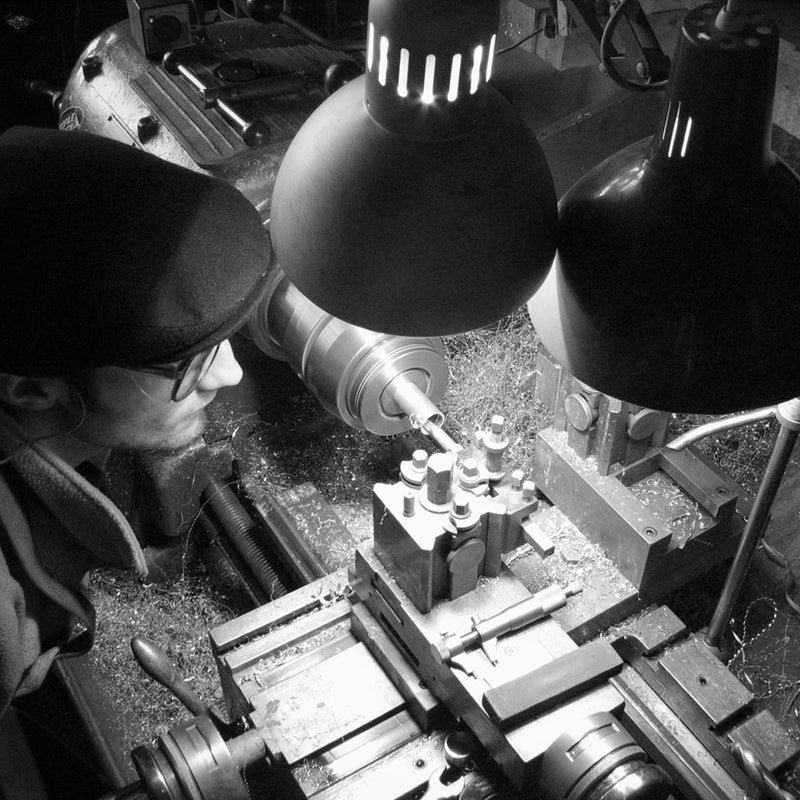
Misha Somerville answers questions often asked about an unusual and incredible profession.
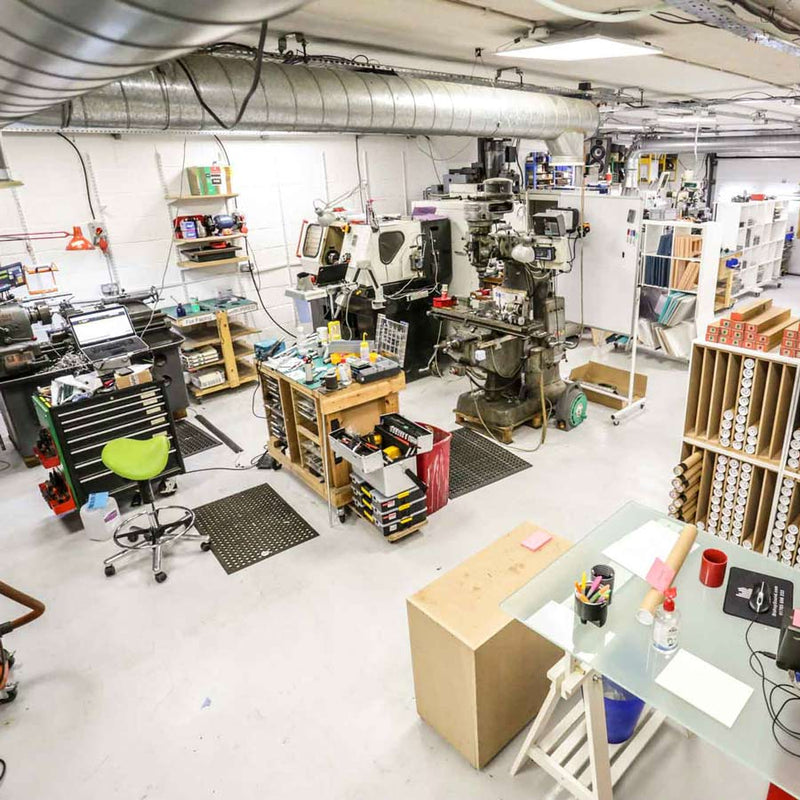
Old oily machines and state-of-the-art technology join forces in the mk workshops.
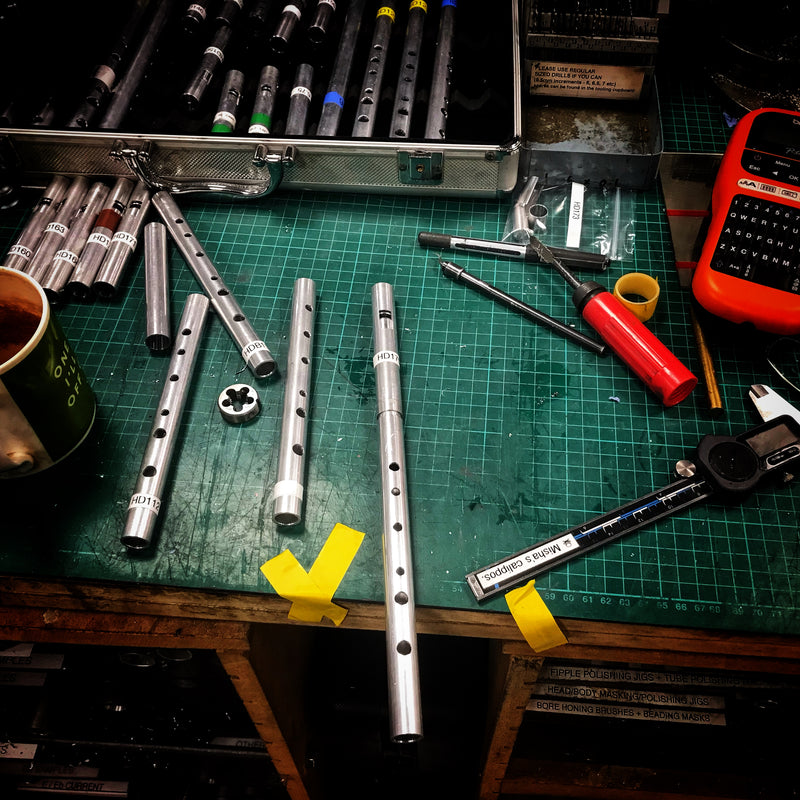
Long term MK-er Liam Hickson asks the questions he wants to ask after 5 years of anticipation, waiting for the mk Midgie High D Whistle.

