

The Questions People Ask a Whistlemaker
Misha Somerville answers questions often asked about an unusual and incredible profession.
Here we answer some of the questions commonly asked when new to High whistles and/or Low whistles.

The primary difference between a low whistle and a tin whistle lies in their size and range. A low whistle is larger and tuned to produce lower notes, giving a deeper and more resonant sound compared to the higher-pitched tin whistle. Low whistles are often favoured for their mellow and haunting tones, while tin whistles are known for their bright and cheerful sound.
Children under the age of 13 may struggle to make the stretch to play a low whistle. Getting started with the Low Whistle early can be a great advantage because young hands are more supple, but there is a point at which it becomes too awkward, therefore making progress frustrating. The great thing is that high whistles can be played from a very early age and the techniques learned are transferrable at a later date to a bigger whistle. An example of a great instrument for early learners to learn on is the mk Midgie High D whistle.
 mk II Midgie - High D
Because of the deep tone, many people are drawn towards Low whistles. However, there are some good reasons why starting with a High whistle can be beneficial...even for adults!
That said, there are no definitive answers to this question. People who have a very high motivation to learn Low whistle, rather than High whistle, may find it more rewarding to start with a Low whistle. An example of a great Low whistle to learn on is the mk Kelpie Low D Whistle.
 mk Kelpie - Low D Whistle
'D' is the most common key to learn on first, primarily because it is the most sociable and allows for playing in the common keys of D and G. If you were to join a group class for example, for the most part 'D' is the most likely key of whistle to be used and without that it may be difficult to join in.
That said, you may have some previous musical experience and be very clear on which keys you are looking to play in, which is absolutely fine also. Here is a chart which may help. If you are sure however then either High D or Low D are the usual starting points.
If you are progressing from High D, then the most usual next step is to Low D. This allows you to take the skills you developed on High D and concentrate on developing suppleness in the hands and pipers grip. Once you have these two it should be easy to jump to any of the excellent keys of whistles in between - F, G, A, Bb, Eb etc.
Whistles come in various keys, including low D, low C, low F, and more. Each key provides a different range of notes and tonal qualities. The choice of key depends on the musician's preferences and the type of music they wish to play.
The great thing about whistles is that they are affordable and accessible. For the purposes of learning, a Generation High D Whistle will get you up and running and learning the basics, and then you can treat yourself at some point in the future.
Get yourself a good quality High D whistle or Low D whistle so you know it's not the instrument holding you back. Have a look to see if there are any local music groups, and find a good tutor to get started. Many tutors are now able to give lessons online to wherever in the world you are.
mk II Midgie - High D
Knowing that you have a quality musical instrument means you know your instrument is not holding you back. The saying 'you buy cheap, you buy twice' can sometimes be applied to musical instruments. With some instruments the difference between okay and great is many thousands of pounds; a superb violin for example will cost tens of thousands of pounds, against an entry level one which may cost a few hundred pounds. But with whistles, luckily, the difference in price isn't that large. Cheaper instruments still have their place of course, and can be used as a stepping stone. There are some great low cost whistles available (and also some not-so-great cheaper whistles!) - looking at reviews can give you an idea, particularly if you can discern which reviews are fair and experienced.
Whistles, like other woodwind instruments, operate on the fundamental principles of acoustics and aerodynamics. Their design enables the production of distinct musical notes through controlled airflow and finger-hole manipulation.
Here's a breakdown of the key elements:
The Tube: A low whistle consists of a long, cylindrical tube typically made of materials such as metal, wood, or composite materials. This tube is designed to resonate and amplify sound.
Mouthpiece: At one end of the tube, there's a mouthpiece with an airway. The musician blows air into the mouthpiece to initiate the sound production process.
Tone Holes: Along the length of the tube, there are tone holes that can be covered or uncovered by the player's fingers. These holes determine the pitch of the notes produced. When a hole is covered, it lowers the pitch of the note produced by increasing the effective length of the vibrating air column.
Sound Production: When the musician blows air into the mouthpiece and covers or uncovers the tone holes, it sets in motion the fundamental physics of sound production. The airstream creates pressure fluctuations within the tube, causing the air column inside to vibrate at specific frequencies based on the length and open/closed status of the tone holes.
Pitch Control: By strategically covering and uncovering the tone holes, the musician can control the length of the vibrating air column. Covering a hole effectively lengthens the column, lowering the pitch, while uncovering it shortens the column, raising the pitch.
Resonance: The tube's cylindrical shape and material properties are carefully designed to resonate at specific frequencies, enhancing the instrument's tonal qualities. The tube's length and diameter are key factors influencing the instrument's range and timbre.
Fingering Technique: Learning the correct fingerings for each note is essential for playing melodies accurately on the low whistle. Musicians practice finger placement and dexterity to produce the desired notes and transitions smoothly.
Breath Control: Achieving control over breath pressure and airflow is crucial for dynamic expression and tone modulation. Musicians develop breath control techniques to infuse their playing with nuances such as dynamics and vibrato.
In summary, low whistles work by using a cylindrical tube with strategically placed tone holes to control the length of the vibrating air column. Musicians manipulate these elements through breath control and finger technique to produce specific musical notes with varying pitch and tonal qualities. The resonant properties of the tube contribute to the instrument's distinctive sound, making it a versatile and expressive choice for playing melodies and creating music.

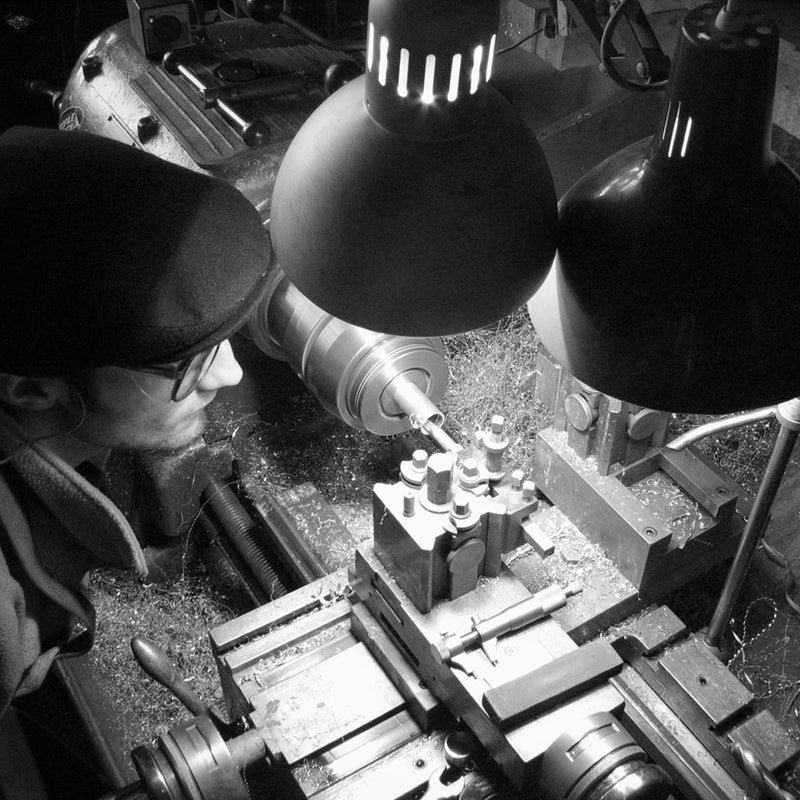
Misha Somerville answers questions often asked about an unusual and incredible profession.

Old oily machines and state-of-the-art technology join forces in the mk workshops.
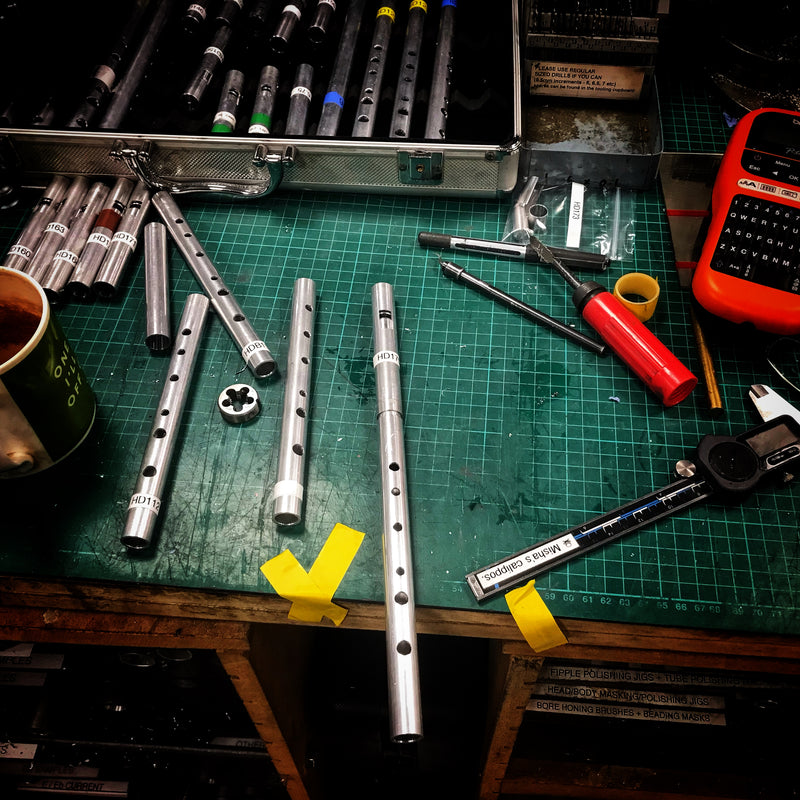
Long term MK-er Liam Hickson asks the questions he wants to ask after 5 years of anticipation, waiting for the mk Midgie High D Whistle.

