

The Questions People Ask a Whistlemaker
Misha Somerville answers questions often asked about an unusual and incredible profession.
I always found it amazing that there wasn't some form of chromatic whistle. I mean this is arguably the world's oldest melodic musical instrument. Why would it be left out when almost all the other commonly thought of musical instruments are chromatic. The number of times that I'd be playing, the music would change key and I'd have to pick up a different instrument, or awkwardly half cover a hole to play a note which sat outside the key. I only ever wanted one whistle - a tried and tested friend that I could take anywhere.
I'm pretty sure I started making musical instruments just to be able to make this chromatic whistle that I wanted to play. But you certainly can't make a nice chromatic whistle without making a great 'basic' one first. And so went 10 years of my life; filing, turning, banging, gluing, polishing, crafting, I worked long hours, often through the night to come up with something of the highest quality that my hands, eyes and ears would allow.
Early sketches were based on a revised version of the Boehm key system - as used on metal flutes, saxophones and clarinets. But the more I looked at it, the more I realised that this heavily mechanised system was a product of the great age of mechanisation, and perhaps in an age where mechanics seemed to be the solution to everything, instrument designers had adopted it too enthusiastically. I thought it might be possible to do something simpler and more elegant, and working with the mechanics of the hand. Even so, it was just a concept - I never expected it to work! But early prototypes surprised me - not only could I leave the original architecture of the instrument intact, but the extra notes didn't seem to involve movements that were too awkward.
The whistle is an instrument which has always survived on the fringes of society - with its simple charm it has been adopted by cultures all the way round the world. The challenge in designing and making the next generation might be trying to maintain the character of the instrument (and the music played on it).
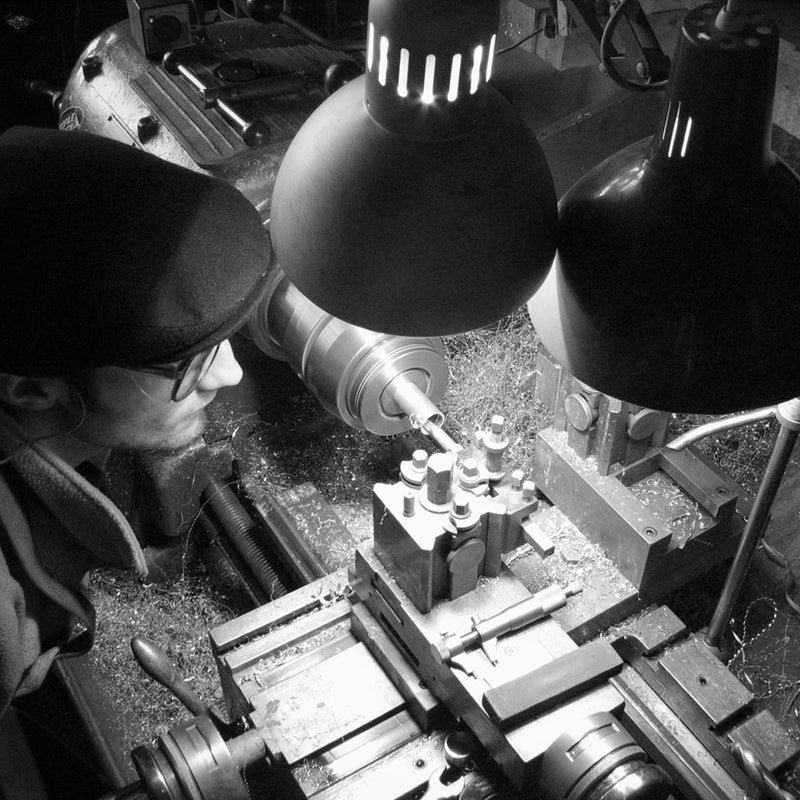
Misha Somerville answers questions often asked about an unusual and incredible profession.
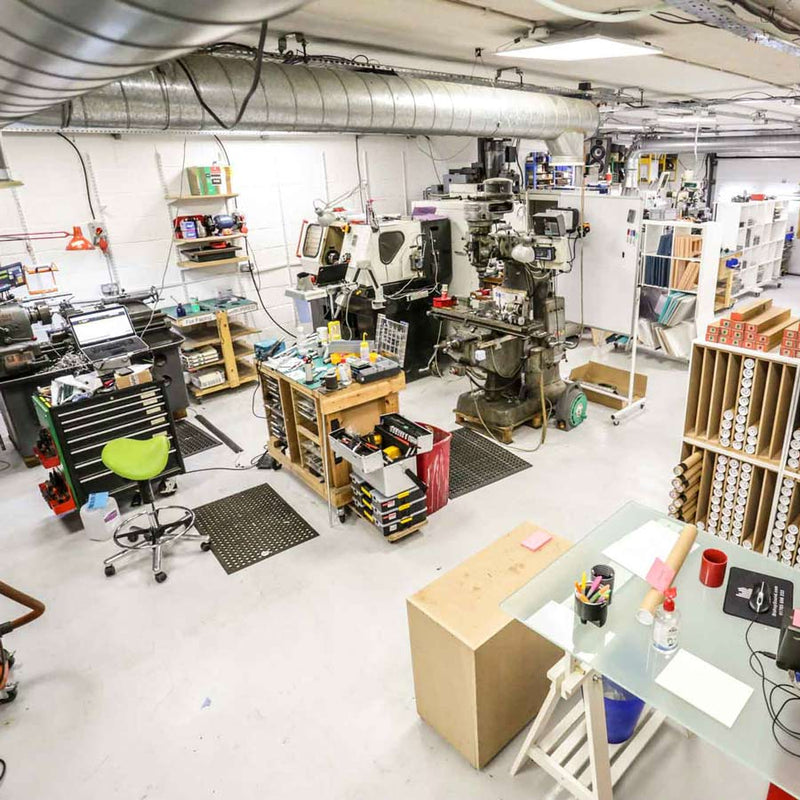
Old oily machines and state-of-the-art technology join forces in the mk workshops.
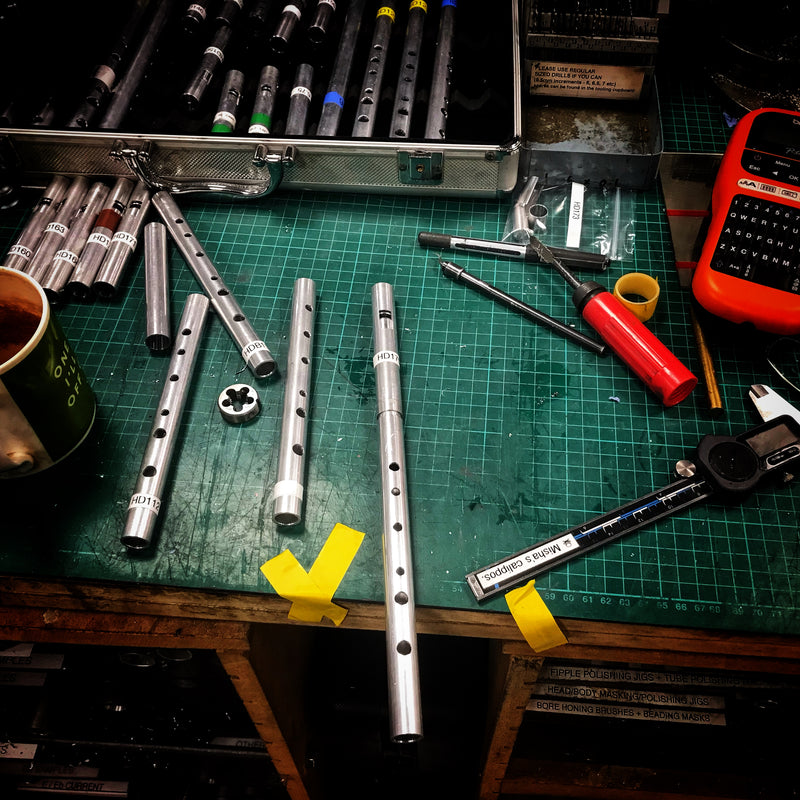
Long term MK-er Liam Hickson asks the questions he wants to ask after 5 years of anticipation, waiting for the mk Midgie High D Whistle.

